One of the most notable shifts in Korea's inbound tourism market is that travelers are getting younger. This means more independent travelers booking directly through OTAs. So which travel apps are foreign tourists actually using?
Hey there — Weekly ON here with your hospitality news roundup. Cherry blossom festivals are kicking off across southern Korea this week. The flower's meaning? Inner beauty, spiritual grace. Maybe this year's the year you plan a trip around peak bloom.
⚠️ All rights reserved. Cite this piece as 'ONDA (온다)' when quoting.
In this issue
🏨 OTA trends: what inbound tourists use by nationality
📬 1st Newsletter & PR Seminar
💡 2024 travel trends in Asia-Pacific
⌨️ #JapanTravelConcerns #ChinaRouteRecovery #ForeignerMobilityProducts #TravelCards #MedicalTourismTrends
🏨 Industry story
International travelers to Korea
OTA preferences by nationality
One of the clearest shifts in Korea's inbound tourism market is that foreign visitors are getting younger. K-content's global reach is pulling in younger travelers who expect to plan everything themselves.
And younger travelers means more independent tourists booking accommodations directly through OTAs instead of relying on tour packages.
The big question for hoteliers? Which apps are these travelers actually using to book? Let's look at what foreign tourists reach for when planning a trip to Korea.
Where do they find travel info?
The Korea Tourism Organization surveyed international travelers in their 20s through 40s visiting Korea independently, tracking which travel apps and sites they use most.
By looking at which apps and websites inbound tourists use before arriving in Korea, we can see where they search for travel info and book accommodations.
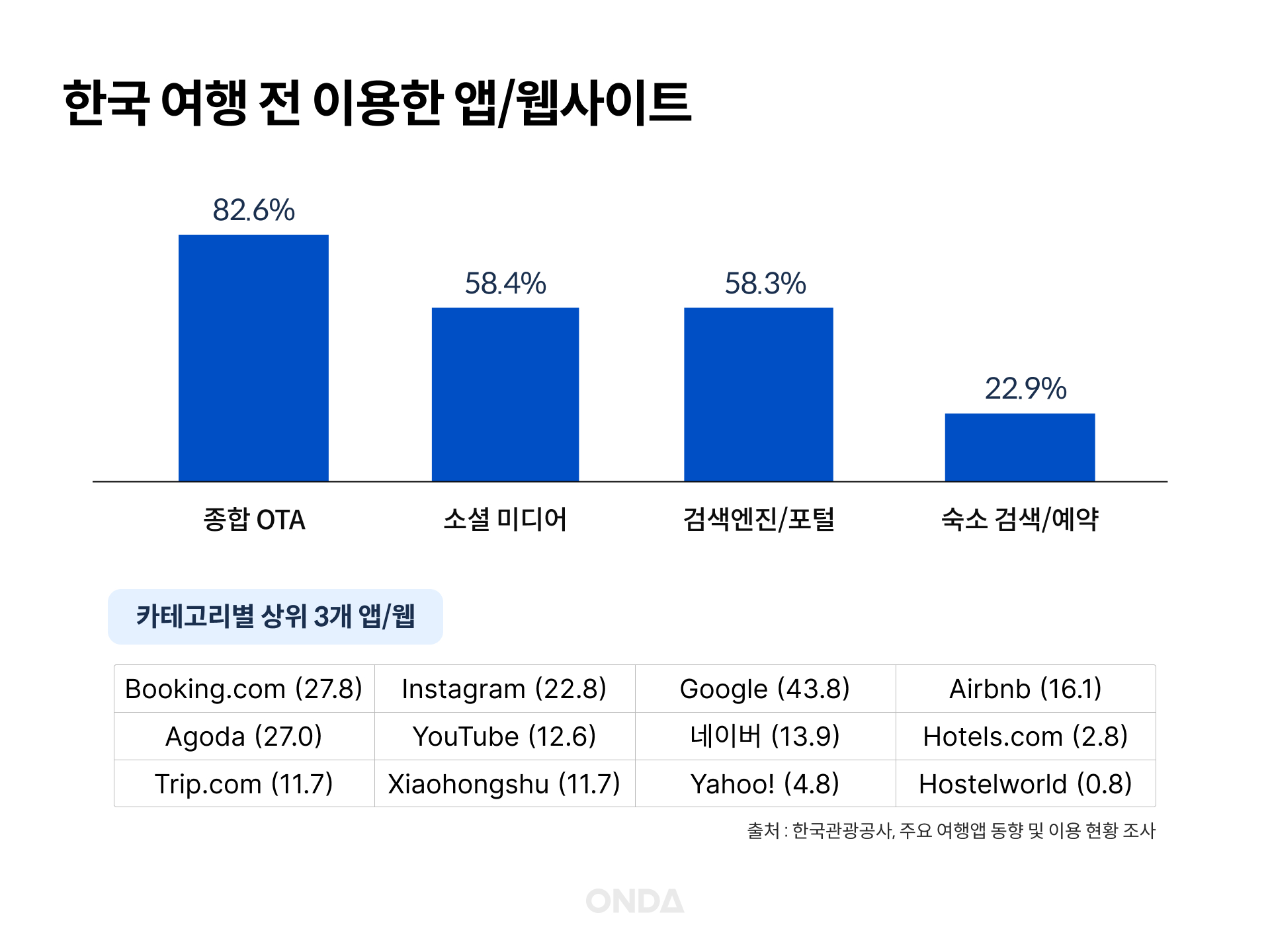
The majority of foreign tourists use global OTAs like Booking.com, Agoda, and Trip.com, along with international accommodation platforms like Airbnb and Hotels.com to research accommodations.
Social media and search also play a big role — Instagram, YouTube, and Google are all major channels for Korea travel discovery.
China, Japan, Taiwan… which OTAs do different nationalities prefer?
So which OTAs do foreign tourists actually book through? Let's break it down by the top nationalities visiting Korea in January 2024 and see which platforms they use to search and book accommodations.
1️⃣ China — 280,035 visitors
Chinese tourists overwhelmingly use domestic OTAs before visiting Korea: Trip.com (Ctrip), Qunar, and Fliggy lead the pack. Booking.com, Airbnb, and Agoda see some traction, but nowhere near the local platforms.
Why? Chinese OTAs offer seamless language support and travel info tailored to Chinese travelers. The convenience factor is high enough that most respondents said they'd keep using the same platforms for future Korea trips.
2️⃣ Japan — 143,152 visitors
Japanese tourists mix global OTAs with domestic platforms. Agoda leads, followed by Booking.com and Trip.com.
But Japanese-specific OTAs like HIS and Rakuten also see heavy use — likely because they offer fluent Japanese service and trustworthy reviews from Japanese travelers.
Other regions — Southeast Asia, Taiwan/Hong Kong, the US/Canada — all show distinct OTA preferences too. So which platforms do they book through? And how can you attract these international guests to your property?
👉OTA Trends of International Travelers to Korea
📬 ONDA news
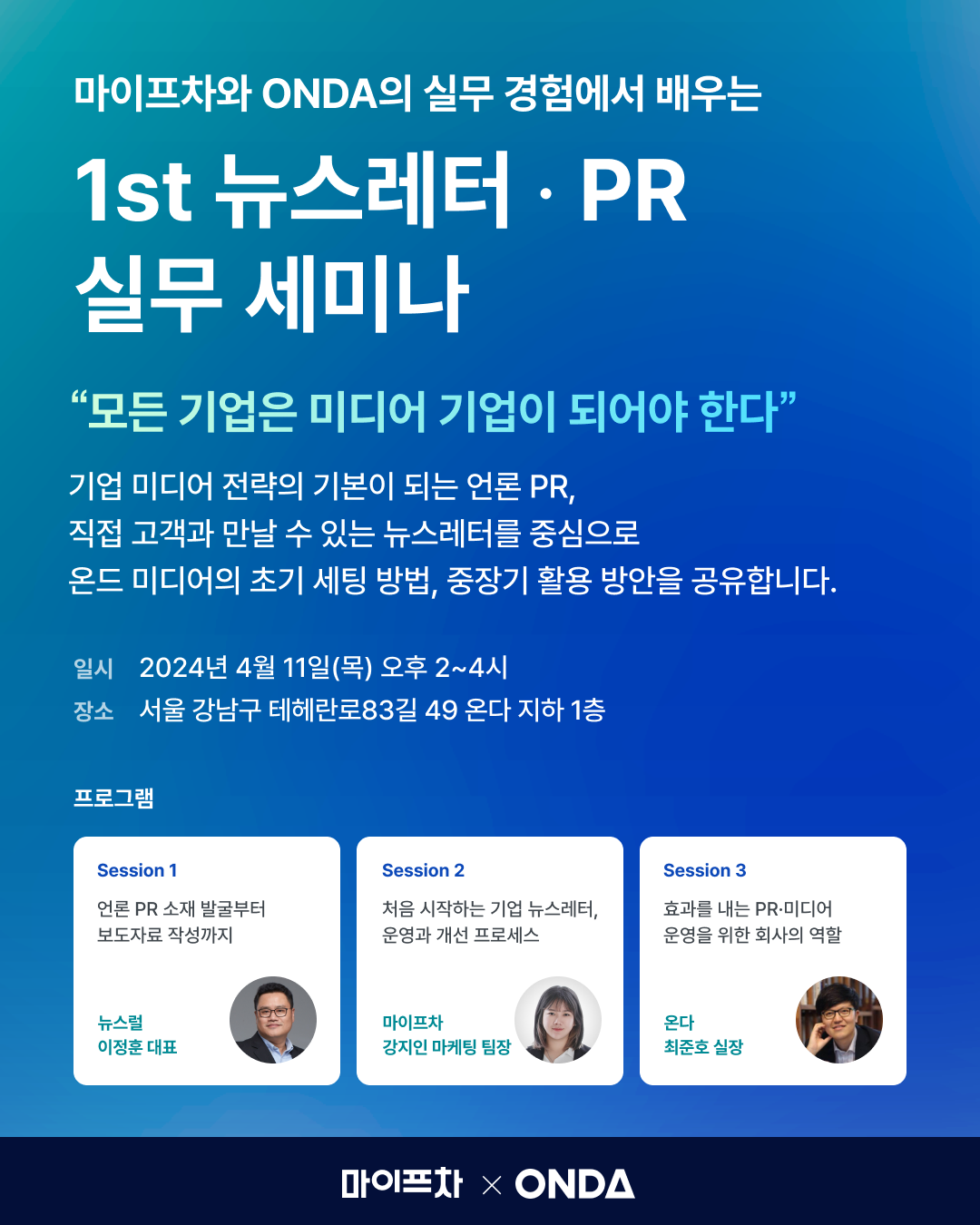
👉Register for the seminar
💡 Hospitality trends
Asia-Pacific region
2024 travel trends
Skyscanner released its 2024 travel trends for the Asia-Pacific region based on search and booking data. There are some notable shifts in booking timelines and destination preferences. How are APAC travelers planning trips this year?
First, as travel uncertainty fades, travelers are booking earlier than in 2023. Bookings made 30+ days in advance increased across the board — one in three travelers now books two months out, and the share of trips booked three months or more in advance also grew. Meanwhile, trip duration has stayed roughly flat or dipped slightly compared to last year, regardless of destination.
European travel bookings from APAC travelers dropped 10% this summer. Europe's still popular, but short-haul Asia destinations are gaining ground fast. Search share for North Asia destinations rose 4% year-over-year — and demand for North Asia travel within the APAC region is expected to stay strong throughout 2024.
More details at the link below.
👉Full story
⌨️ Keyword news
1️⃣ Japan travel concerns 👉[Full story]
TL;DR: Rising STSS cases spark worries about Japan travel
The story: Cases of streptococcal toxic shock syndrome (STSS) are surging in Japan, raising concerns about travel safety. Japan recorded 941 STSS cases in all of 2023, but 378 in the first two months of 2024 alone.
Demand impact? Around 820,000 Koreans visited Japan in February — the highest of any nationality. Modetour says there have been some cancellation inquiries, but April Japan bookings are up year-over-year.
2️⃣ China route recovery 👉[Full story]
TL;DR: China route passengers top 1 million in February
The story: For the first time since COVID, monthly passengers on Korea-China routes surpassed 1 million in February. Korean travel to China and Chinese inbound travel to Korea are both rebounding fast.
Inbound demand? Around 280,000 Chinese tourists visited Korea in January, making China the top source market for inbound tourism. February likely topped 300,000, thanks to the Lunar New Year holiday.
3️⃣ Foreigner mobility products 👉[Full story]
TL;DR: Travel platforms expand mobility options for foreign visitors
The story: Global travel platforms like Klook and Trip.com are adding train and express bus booking options to help inbound tourists explore Korea's regions. Payments are now supported in foreign currencies directly on the platforms.
Outlook? Simpler booking flows and multi-currency payments should make it easier for foreign tourists to travel outside Seoul.
4️⃣ Travel-focused cards 👉[Full story]
TL;DR: Card issuers compete for overseas travel market
The story: With overseas travel demand surging, card issuers are racing to launch travel-focused products. Features include zero FX fees, auto foreign currency top-ups, and travel perks.
Market size? Hana Travellog, an early mover, surpassed 4 million cards issued last month. Toss, Woori Bank, and Shinhan Bank are all launching competing products.
5️⃣ Medical tourism trends 👉[Full story]
TL;DR: Plastic surgery leads medical tourism transaction volume and revenue
The story: The most popular medical services among foreign visitors to Korea are plastic surgery (by volume and revenue) and dermatology (fastest-growing). Taiwanese tourists drive demand for plastic surgery; Japanese tourists favor dermatology.
Outlook? Korea's medical tourism market has been dominated by plastic surgery and dermatology, but dental and ophthalmology services are expected to see increased foreign demand this year.