Pricing rooms is one of the toughest decisions accommodation operators face. It's entirely up to you — which is why we've put together this guide to help you find your floor.
Hi there — this is Weekly ON, your hospitality newsletter. Pricing rooms is one of the toughest decisions accommodation operators face. Unlike running a franchise or a convenience store where prices are set for you, room rates are entirely up to you. That's why today we're breaking down a framework for setting your rates.
⚠️ All rights reserved. Cite this piece as 'ONDA (온다)' when quoting.
In this issue
🏨 How should you price your rooms?
📬 Newsletter & PR Workshop (1st edition)
💡 2023 Jeju travel trends: domestic vs. international visitors
⌨️ #Feb_inbound_tourism #travel_spending_decline #boutique_hotels #foreign_guest_share #lifestyle_accommodation_reporting
🏨 Industry Talk
How should you
price your rooms?
Pricing rooms is one of the hardest parts of running a property.
If you own a franchise restaurant or a convenience store, you sell products at fixed prices. With accommodation, the rate is entirely on you. So here's a minimum viable framework for setting your room prices.
For small to mid-size properties (like guesthouses and pensions), pricing usually comes down to three factors:
1️⃣ The most common method: check what similar properties nearby are charging on booking platforms, then price competitively within that range.
2️⃣ Calculate your cost basis and work backward. This includes all upfront costs (construction, interior, permits, etc.), labor, and operating expenses (utilities, taxes, etc.).
A typical goal for pension operators is to break even within 24 months. Divide your total cost by 24 to get your monthly nut, then reverse-engineer the minimum nightly rate you need to hit that target.
We strongly recommend establishing a floor — a rate below which you will not go — before you start operations.
3️⃣ Identify your premium drivers. Great location is usually the biggest lever. Add differentiated amenities (BBQ, pool, spa/jacuzzi, high-end toiletries) and layer in the premium guests are willing to pay.
But there's one more critical variable: seasonality. You need to adjust for peak vs. off-peak. While the gap has narrowed in recent years, peak season still makes or breaks your year. So how big is the spread between high and low season?
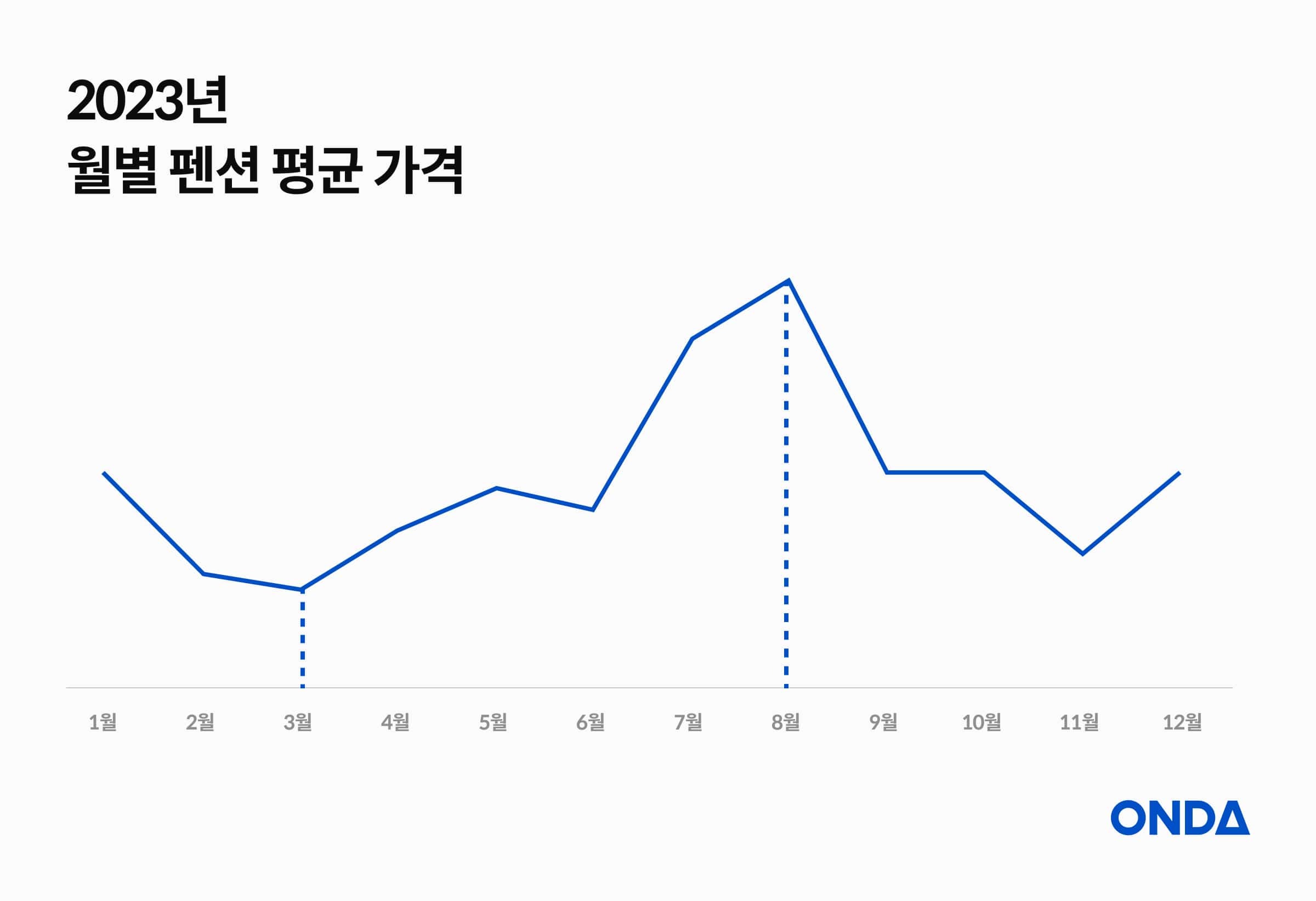
The chart above shows monthly average prices for pensions booked through ONDA in 2023. August saw the highest rates, March the lowest.
So what's the actual dollar difference between peak and off-peak? And how should you price for each?
👉<How should you price your rooms?>
📬 ONDA News
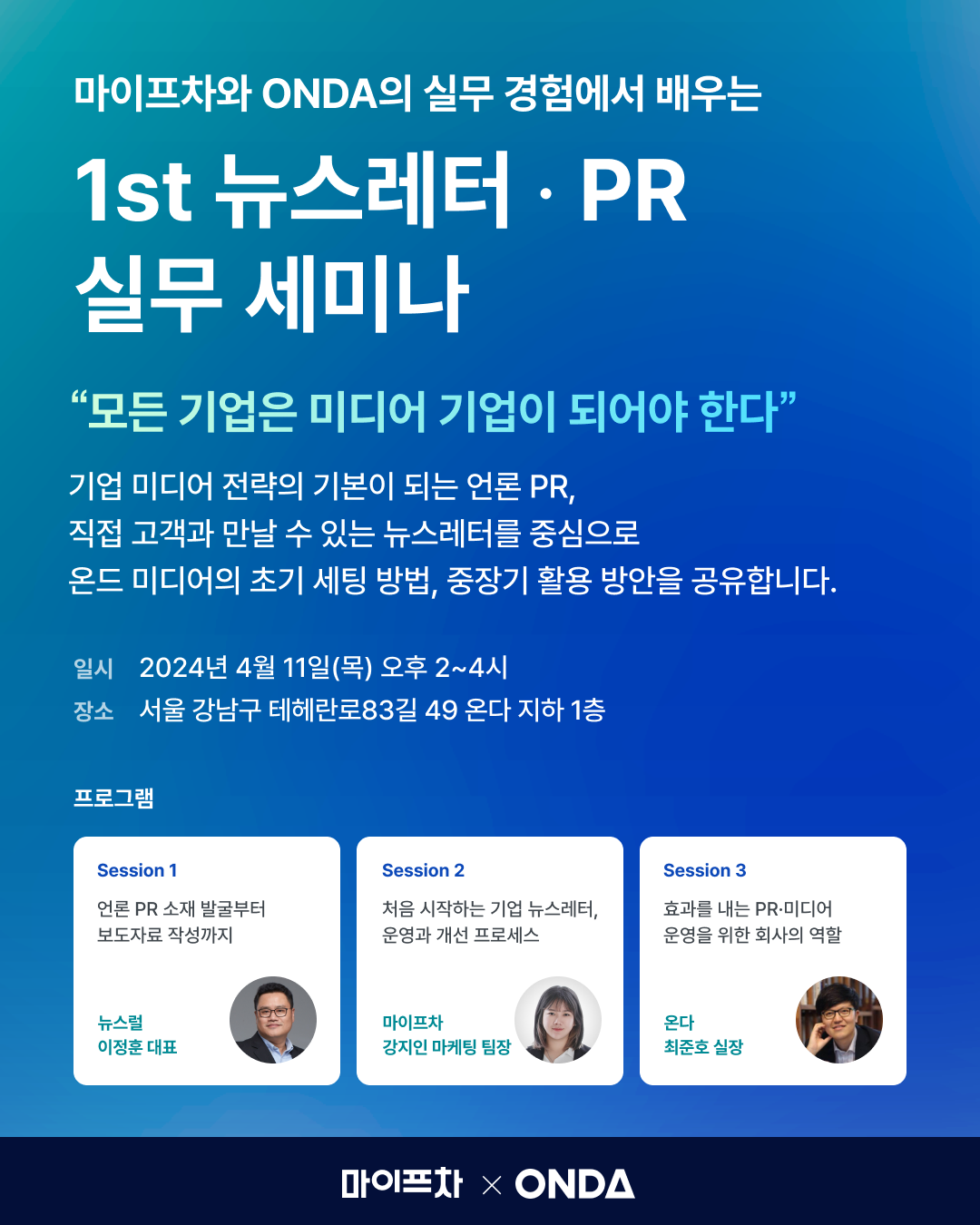
👉<Register for the workshop>
💡 Hospitality Trends
Jeju 2023:
Domestic vs. international travelers
According to the 2023 Jeju Visitor Survey by Jeju Tourism Organization, domestic travelers spent an average of ₩665,843 per person in 2023 — a slight increase from ₩661,371 in 2022.
But accommodation spending dropped sharply: from ₩155,369 in 2022 to ₩127,171 in 2023. The shift likely reflects post-pandemic travel demand spreading back to international destinations.
Hotels accounted for 60.2% of stays, followed by condos/resorts (17.2%), pensions (14.4%), and guesthouses/hostels (3.9%). Compared to pre-COVID, hotel share rose while pensions and condos shrank.
What about international visitors? Foreign tourists spent an average of ₩1.4M per trip in 2023 — down ₩200K from 2019. Accommodation ranked third in spending, after flights and shopping.
Hotels dominated at 81.3%. Japanese and Chinese guests overwhelmingly chose hotels, while Southeast Asian and North American travelers used hotels but also stayed at guesthouses and pensions at relatively higher rates.
Full report below!
👉<Full story>
⌨️ Keyword News
1️⃣ February inbound tourism 👉[Full story]
TL;DR: February inbound tourism up sharply, led by Chinese visitors
The story: Inbound arrivals hit 1.03 million in February — up 115% YoY and 17% MoM. Chinese visitors exceeded 340K, showing the clearest recovery trend.
What about outbound? Koreans traveling abroad topped 2 million for the eighth consecutive month. February saw ~2.5M outbound travelers, reaching 96% of pre-pandemic levels.
2️⃣ Travel spending contraction 👉[Full story]
TL;DR: Domestic travel spending down from pre-COVID levels
The story: Domestic travel spending climbed post-pandemic but has declined since 2022. Adjusted for inflation, real spending is now below pre-COVID.
The numbers? In February 2024, average spending per person per day was ₩74K — a sharp drop from the ₩90K peak in June 2022.
3️⃣ Boutique hotels 👉[Full story]
TL;DR: Major hotel brands racing to expand boutique (business) hotel portfolios
The story: Leading Korean hotel groups are competing to open boutique hotels. Brands like L7 and Shilla Stay are gaining traction, attracting third-party management contracts.
Why? Boutique hotels require less upfront capital than luxury properties while delivering stable returns. Haeundae Beach Hotel, Hanwha Hotels & Resorts, and others are planning boutique rollouts.
4️⃣ Foreign guest share at hotels 👉[Full story]
TL;DR: Foreign guests now make up 80% of bookings at major Korean hotels
The story: Major hotels saw March occupancy rates rise more than 10 percentage points YoY, driven by international guests approaching 80% of total bookings.
Why? Special events like the MLB World Tour and Asia's 50 Best Restaurants Awards boosted foreign bookings starting in March.
5️⃣ Lifestyle accommodation reporting 👉[Full story]
TL;DR: Ministry urging lifestyle accommodation operators to register as lodging businesses
The story: The Ministry of Land, Infrastructure and Transport told local governments to check registration status for lifestyle accommodations and encourage compliance. A grace period runs through year-end, with enforcement penalties suspended.
What's next? The ministry says no further extensions. Owner groups are lobbying for semi-residential classification, but the government plans to impose penalties once the grace period ends.