We analyzed nationwide accommodation pricing trends from 2023–2024, along with weekday (Sun–Thu) and weekend (Fri–Sat) booking price fluctuations in Gyeonggi-do, Jeju, and Gangwon-do.
⚠️ All rights reserved. Cite this piece as 'ONDA (온다)' when quoting.
Today's Weekly ON
🏠 Pension price trends: the value-luxury divide
💡 Travel app users: 1.8× pre-pandemic levels
⌨️ #AirbnbLicensing #TravelBookingChannels #FloatingHolidays #JejuRebound #SeoulShortTermRentals
🏠 Industry Stories
Pension Price Trends: The Value-Luxury Divide
Now that overseas travel is back, Korea's pension and pool villa sector is feeling the pressure. Midweek vacancy rates are top of mind for many operators.
Travel products—especially lodging—are hyper-sensitive to trend shifts. When demand is high or alternatives are scarce, prices climb (think peak season in late July and early August). When competition heats up, prices adjust downward.
That's why ONDA is spending two weeks digging into real booking data for pensions and pool villas nationwide.
This week: nationwide price trends from 2023–2024, plus weekday (Sun–Thu) and weekend (Fri–Sat) booking price changes in Gyeonggi-do, Jeju, and Gangwon-do. Next week: we'll zoom in on popular tourist hotspots within those regions to see how pricing evolved.
Let's start with the national picture. For reference, "off-season" here means January 1 – March 31, and "peak season" covers June 15 – July 15.
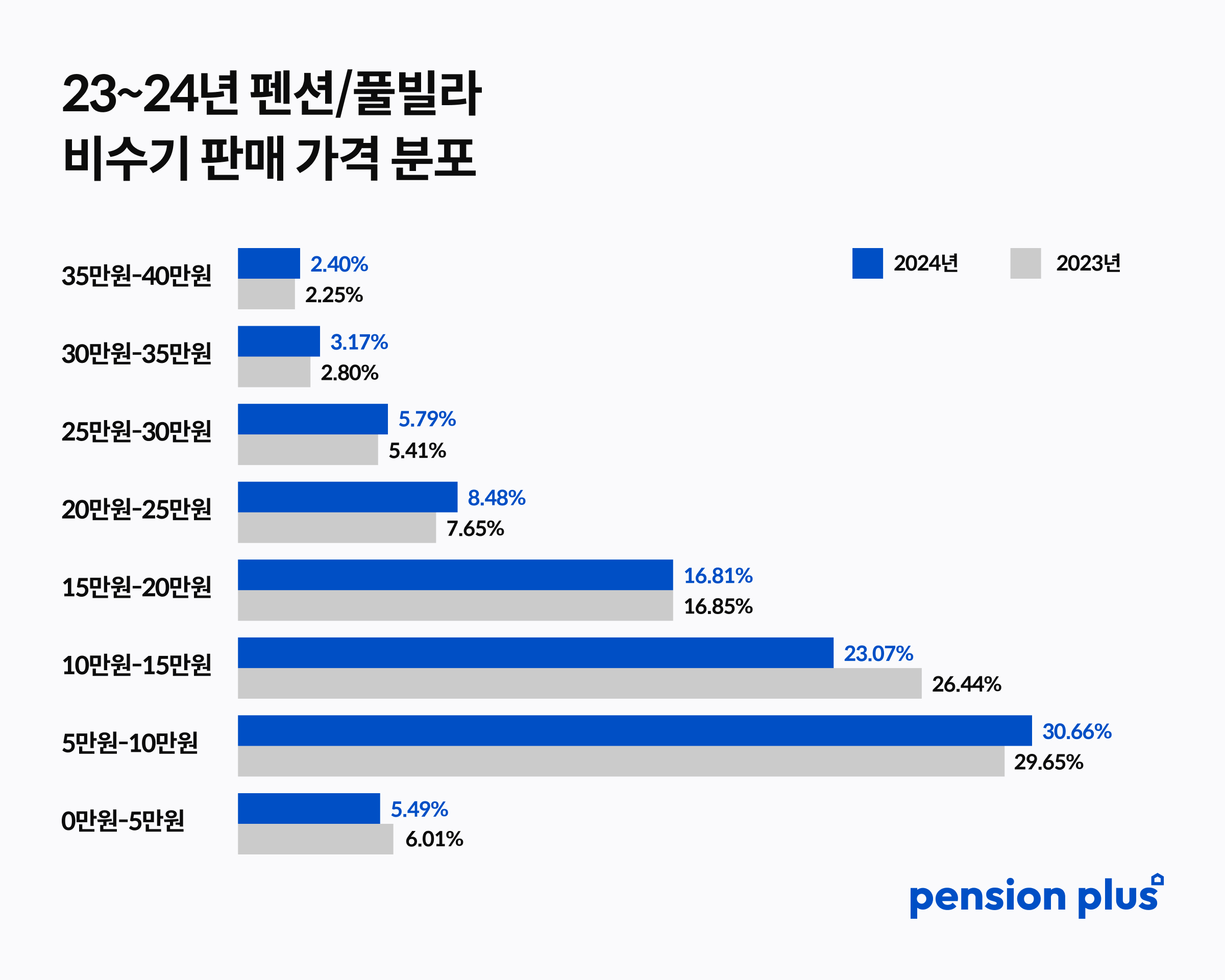
First up: the share of ₩100,000–₩150,000 properties dropped noticeably from 2023 to 2024. Still, the ₩50,000–₩200,000 value segment dominates. Meanwhile, luxury properties priced above ₩200,000 saw a modest uptick in demand.
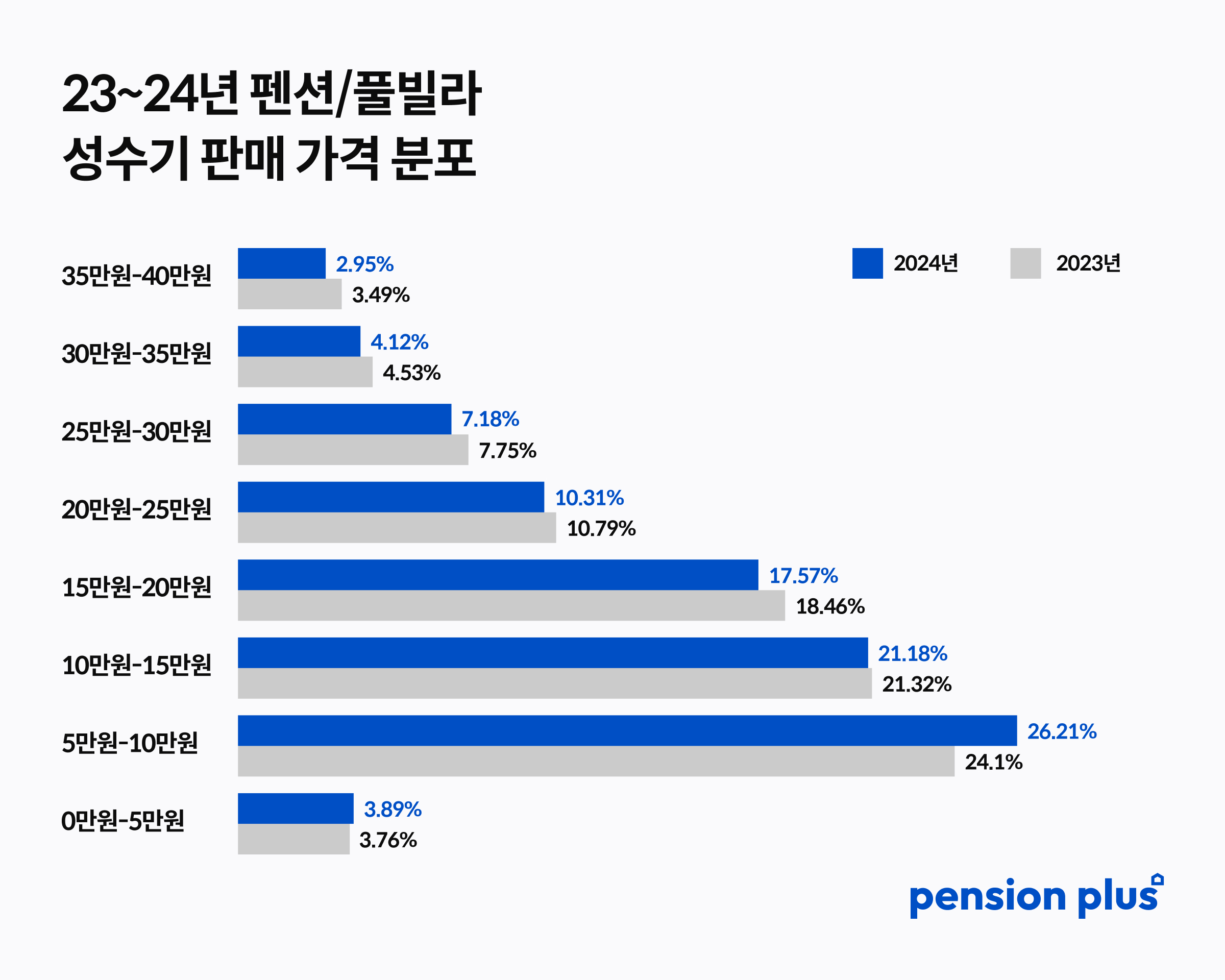
In 2024's peak season, sales of ₩50,000–₩100,000 rooms rose about 2% year-over-year, while demand for properties priced ₩150,000+ fell across the board. Not shown in the table: ultra-luxury properties (₩600,000+) saw a sharp jump in demand.
Bottom line—as uncomfortable as it is to say: value properties are getting cheaper. Luxury properties are getting pricier. We're seeing a two-track market: strong value players and rising demand for true luxury.
The make-or-break factor for most operators? Reducing midweek vacancies. So how did weekday pricing shift in top tourist destinations during off-season vs. peak season?
👉<Read the Full Analysis>
💡 Hospitality Trends
Travel App Users: 1.8× Pre-Pandemic Levels
June saw travel platform app users hit 9.69 million—1.8× the 5.45 million recorded in June 2019. Post-pandemic, travel demand has climbed steadily, making up for the COVID-era collapse.
Transaction volumes nearly doubled, too. Estimated payments through travel platforms reached ₩1.23 trillion in June 2024, up from ₩669.8 billion in June 2019—a staggering surge.
So which platforms are travelers using? By user count: Yanolja (3.9M), Yeogi Eottae (3.7M), Agoda (1.87M), Airbnb (1.4M), Trip.com (1.29M). While the two Korean OTAs lead in absolute numbers, international platforms are growing much faster.
Yanolja and Yeogi Eottae saw 4.5% and 7.7% year-over-year growth in monthly active users, respectively. Compare that to Agoda (35.1%), Airbnb (25.7%), and Trip.com (82.7%)—the international OTAs are surging. Both Agoda and Airbnb hit all-time-high user counts in June 2024.
👉<Full Story>
⌨️ Keyword News
1️⃣ Airbnb Licensing 👉[full story]
TL;DR: Airbnb mandates business registration for all listings
The story: Airbnb announced it will remove unlicensed properties from its platform. Hosts must submit official business registration info and certificates. Unregistered listings will be phased out.
What's next? Starting late this year, new listings can't go live without proper documentation. Existing listings have until end of 2025 to comply.
2️⃣ Travel Booking Channels 👉[full story]
TL;DR: Korean travelers prefer travel agencies and OTAs for overseas trips
The story: 47.4% of Korean consumers book overseas travel through agencies or OTAs—up ~5pp from last year. Direct bookings (20.8%) fell slightly.
Top channels? Agoda, Hana Tour, Skyscanner, Modetour, and MyRealTrip led the pack. Agoda jumped from 5th to 1st year-over-year—international platforms are gaining ground.
3️⃣ Floating Holidays 👉[full story]
TL;DR: Government considering "floating holidays" tied to weekdays
The story: Korea is exploring a system where certain public holidays are set by day-of-week (e.g., the Nth Friday or Monday), guaranteeing long weekends.
What's next? Research shows one additional substitute holiday boosts domestic travel spending by ₩431.8 billion annually. Floating holidays could unlock significant travel demand.
4️⃣ Jeju Tourism Rebound 👉[full story]
TL;DR: H1 Jeju visitors up 3.1% year-over-year
The story: Jeju welcomed ~6.86 million visitors in H1 2024, up 3.1% from the same period last year. Strong foreign tourist numbers and recovering domestic demand drove Q2 visitors up 11% from Q1.
Domestic visitors? H1 domestic visitors (~5.95M) fell 7.6% year-over-year, but monthly totals have topped 1 million since April—a clear upward trend.
5️⃣ Seoul Short-Term Rentals 👉[full story]
TL;DR: Seoul sees surge in foreigner-only guesthouse registrations
The story: As of July 15, Seoul had 2,206 registered foreign tourist guesthouses—up 20% (457 units) in just three months. Meanwhile, general lodging businesses (2,480) grew only 1.2% (30 units).
Other regions? Seoul dominates foreign tourist guesthouse registrations by a wide margin. Busan (277), Jeonbuk (239), Gangwon-do (157), Gyeonggi-do (134), and Gyeongbuk (94) follow.