We compared off-season and peak-season pricing trends across 5 major Korean tourist destinations: Gapyeong-gun (Gyeonggi), Yangyang-gun (Gangwon), Jeju City (Jeju), Gyeongju City (Gyeongbuk), and Yeosu City (Jeonnam).
⚠️ All rights reserved. Cite this piece as 'ONDA (온다)' when quoting.
Today's Weekly ON
🏠 Yangyang, Gapyeong, Jeju...pension/pool villa pricing by region
💡 Booking app users juggle 2+ platforms
⌨️ #NaviDestinations #VacationBudgets #HotelExperiences #TourismSpending #SeoulHotelFAR
🏠 Industry Story
Yangyang, Gapyeong, Jeju...Regional Pension/Pool Villa Pricing Trends
Last week, we looked at pension and pool villa pricing across provinces like Gangwon and Jeju. Today, we're drilling down into the details.
We compared off-season vs. peak-season pricing in 5 iconic Korean destinations: ▲Gapyeong-gun (Gyeonggi) ▲Yangyang-gun (Gangwon) ▲Jeju City (Jeju) ▲Gyeongju City (Gyeongbuk) ▲Yeosu City (Jeonnam).
Gangwon Yangyang...Targeting Gen Z and Millennials
Riding the surfing boom, Yangyang has become one of Korea's top destinations. So what happened to off-season pension and pool villa prices?
The standout: budget pensions in the ₩50,000–100,000 range dropped from 44.3% in 2023 to 33.9% in 2024—a 10+ percentage point decline.
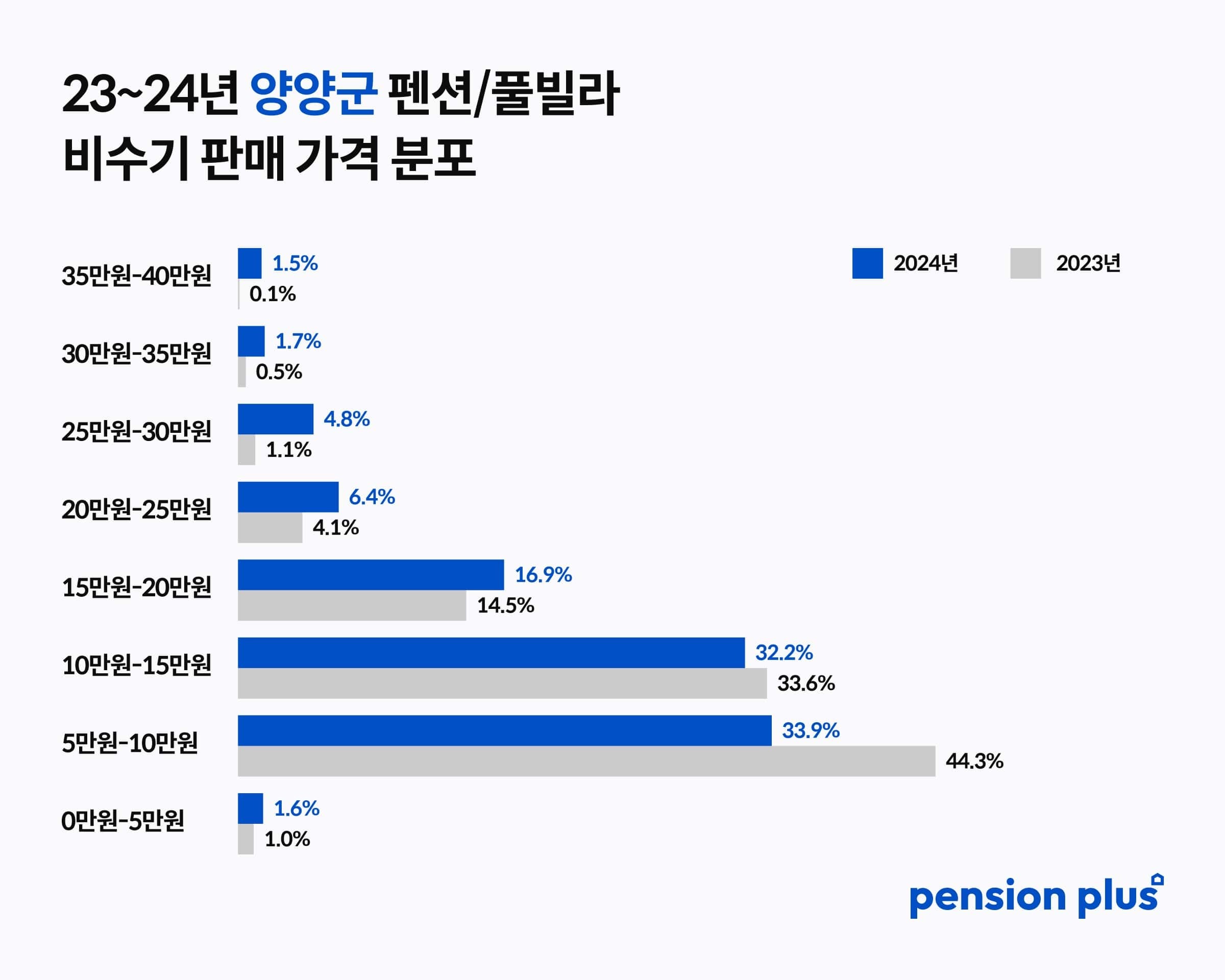
It's a sign of just how hot Yangyang tourism is. Our nationwide pricing comparison showed that ₩50,000–100,000 properties are gaining share nationally—but Yangyang is bucking the trend, with relatively strong demand even for higher-priced properties in the off-season. In other words, Yangyang's off-season pricing is spreading across more price tiers instead of clustering at the bottom.
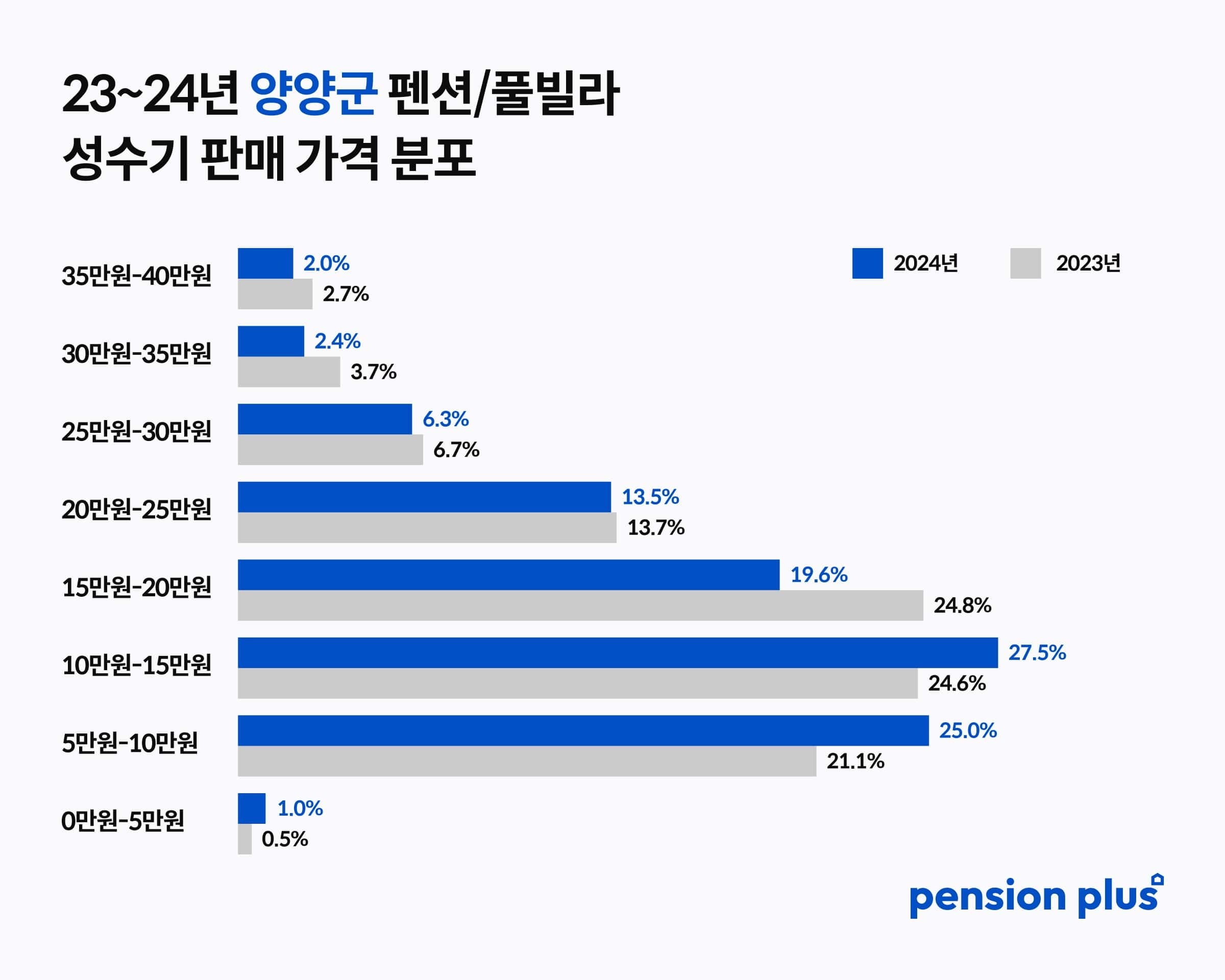
The peak season tells a different story. In 2024, the share of reasonably priced properties (₩50,000–150,000) rose 6.8 percentage points year-over-year. Competition in the ₩100,000–150,000 band has gotten especially fierce.
There's also an interesting divergence from national trends: even in peak season, demand for luxury properties (₩250,000+) fell in Yangyang. Yangyang—along with nearby Gangneung—draws a lot of travelers in their 20s and 30s, so there's less family travel and less appetite for high-end stays compared to other regions.
In other words, you can't just jack up peak-season prices and expect bookings to follow—Yangyang demands smarter pricing strategies.
If Yangyang is the surfing mecca, Gapyeong is the pension mecca. So how did pricing shift in Gapyeong-gun (Gyeonggi)? And what about Jeju, Gyeongju, and Yeosu?
👉<Regional Pension/Pool Villa Pricing Trends>
💡 Hospitality Trends
Booking App Users Juggle 2+ Platforms
The Ministry of Science and ICT released a study on how Koreans use major platform services. It tracked "multi-homing rate" (% using 2+ platforms in the past 3 months) and "switching rate" (% who changed their primary service in the past year)—both revealing.
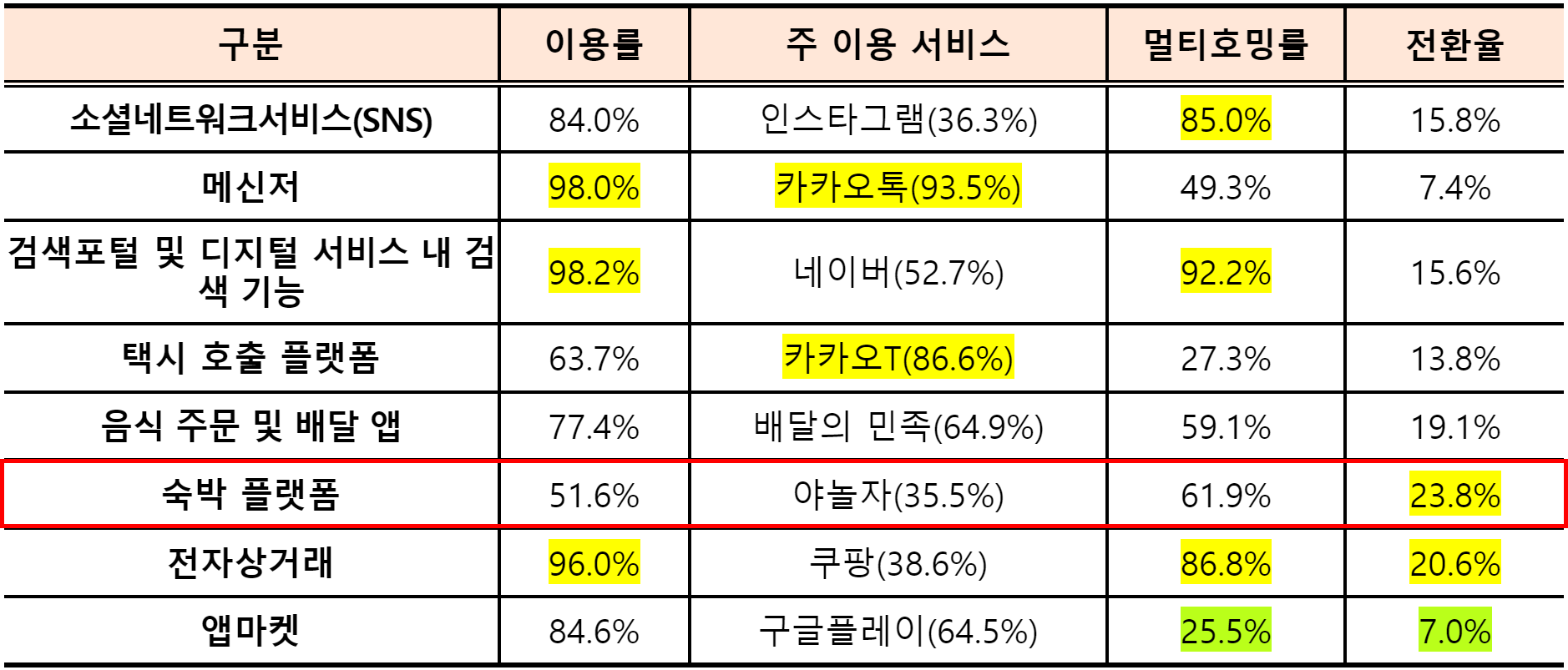
For booking platforms, 1 in 2 people (51.6%) had used one in the past 3 months. Yanolja led with 35.5% share—but the multi-homing rate was 61.9%, meaning most users actively compare and use 2+ booking platforms.
Also striking: booking platforms had the highest switching rate of any category. With each platform offering different coupons and promotions—and accommodation prices fluctuating constantly—travelers rotate between apps. For properties, that means you need to be on as many platforms as possible to reach the maximum number of guests.
👉<Full story>
⌨️ Keyword News
1️⃣ Top Navi Destinations 👉[full story]
TL;DR: Gangwon and Chungcheong top summer navigation searches
The story: TMAP analyzed 2 years of August driving data and found Gangwon-do and Chungcheong-do are Korea's favorite summer getaways. Outside the Seoul metro area, 42% of trips were headed to Gangwon.
What are people visiting? In the capital region, people seek out theme parks, islands, valleys, parks, and caves—diverse categories. Outside Seoul, 7 of the top 10 destinations were beaches or water parks, showing a strong water-focused travel pattern.
2️⃣ Summer Vacation Budgets 👉[full story]
TL;DR: Summer vacation budgets shrink to ₩200,000–400,000 per person
The story: High inflation is squeezing vacation budgets. Last year, the most common answer was ₩400,000–600,000 per person; this year it's dropped to ₩200,000–400,000.
Where to? 7 in 10 travelers plan to stay domestic. The top choices: Gangwon-do (31.3%), Jeju (18.1%), Busan (9.1%).
3️⃣ Hotel Experience Consumption 👉[full story]
TL;DR: Hotels double down on experiential vacation packages
The story: Korean hotels are rolling out theme-based packages—"watercation" (pools), "beautycation" (beauty), "wellcation" (wellness)—to match consumers' shift toward experience-driven spending.
Why? The Korea Economic Research Institute says young people who grew up in slow-growth economies now prioritize experiences over ownership—and they're driving consumer trends.
4️⃣ Tourism Spending 👉[full story]
TL;DR: Domestic tourist spending down slightly YoY
The story: Tourism spending by Koreans fell 6.2% in H1 2024 vs. H1 2023. Travel agencies and F&B saw modest gains, but lodging, shopping, and transport all declined.
What about inbound? Foreign visitor spending jumped ~46% year-over-year, helping offset the domestic drop—but nearly all of that spending is concentrated in Seoul.
5️⃣ Seoul Hotel FAR Incentive 👉[full story]
TL;DR: Seoul offers up to 100% FAR bonus for 3-star+ hotels in redevelopment projects
The story: New rules allow developers to earn up to double the floor area ratio if they include a 3-star+ hotel in downtown Seoul redevelopment projects—part of the city's push to expand accommodation supply.
Why? Many 2–4-star hotels closed during COVID. According to Ministry of Culture data, the number of 2–4-star hotels in Seoul fell 14.5% from 207 in 2019 to 177 in 2022.