In AI, LLMs—especially ChatGPT—play the same role that the iPhone and web browsers did for their respective platforms.
⚠️ All rights reserved. Cite this piece as 'ONDA (온다)' when quoting.
In This Week's Issue
🏨 Spend Two Hours a Day with ChatGPT
💡 Petcations and dog-cations: pet-friendly travel takes off
⌨️ #DomesticHomesharingForLocals #SummerVacationPlans #OccupancyCaps #ForeignTouristsinLocalRegions #DomesticGolfDemand
🏠 Industry Story
Spend Two Hours a Day with ChatGPT
Hello, Weekly ON readers.
Today we're stepping outside travel and hospitality to talk about something that's reshaping every aspect of our lives: how to actually use LLM-based AI.
Recently our team attended a seminar titled "Big Tech's LLM Strategy, Explained by a 30-Year Developer." One slide hit us like a wake-up call.
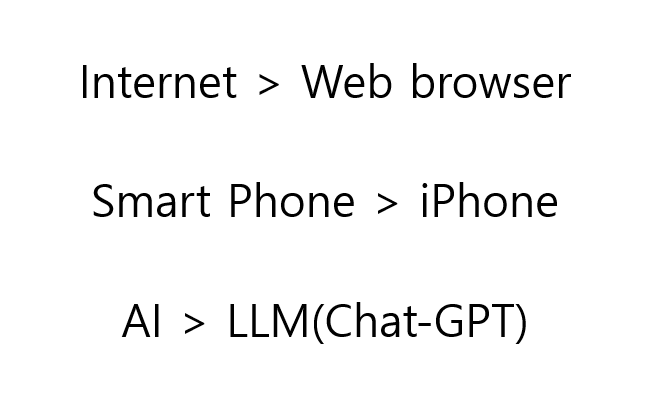
Here's what it said: We think using a web browser—Google Chrome, Naver Whale, Safari, Edge—is the same thing as using the internet.
The internet and web browsers are tightly linked, but technically, a browser is just a tool for accessing information on the internet.
The internet is an online platform that handles email, websites, file transfers, and much more. A web browser's job is to fetch and display web page content from servers.
Still, we equate using a browser with "using the internet." Why? Because browsers brought the internet to the masses. They made it an essential part of daily life.
The iPhone played the same role for smartphones. Pre-iPhone smartphones existed—they had wireless connectivity, browsers, email—but the iPhone's intuitive UX and the App Store democratized the smartphone.
In other words, the iPhone and web browsers were the gateways that let smartphones and the internet enter our lives.
In AI, LLMs—especially ChatGPT—play the same role.
👉<Read the Full Story>
💡 Hospitality Trends
Petcations and Dog-Cations: Pet-Friendly Travel Takes Off
With Korea's pet-owning population hitting 15 million, pet-friendly travel is booming. Hotels and resorts are racing to roll out "petcation" and "dog-cation" packages.
A Korea Tourism Organization (KTO) survey found that 60.4% of pet owners took an overnight trip with their dog in the past year (up from 53% in 2022). 74.6% of pet owners plan to travel domestically with their pet in the next year.
Pet-traveling guests overwhelmingly prefer pensions (49.1%), followed by hotels (20.8%), camping/glamping (16.2%), and condos/resorts (15.8%). Since they prioritize pet-friendly amenities, accommodation accounts for 36.9% of total trip spending—by far the largest share.
Where do they book? Many use pet-travel-specific platforms like "Banryeosaenghwal" (반려생활) as their first port of call.
As demand for pet travel grows, bookings through specialized vertical platforms are set to rise. If you run a pet-friendly property, it's worth paying attention to these niche travel platforms.
👉**<Read the Full Report>**
⌨️ Keyword News
1️⃣ Domestic Urban Homesharing 👉[full story]
TL;DR: Government plans to allow Koreans to use urban homeshares
The story: To boost domestic tourism and consumer spending, the government is moving to allow Korean nationals to book urban homeshares (currently restricted to foreign tourists). The plan also relaxes rules around exclusive-use rentals and drops the requirement for neighbor consent.
The approach? The government says it will introduce safeguards against corporate homesharing and illegal activity (drugs, prostitution). Details are expected in October.
2️⃣ Summer Vacation Plans 👉[full story]
TL;DR: Endless rain and heat waves disrupt summer vacation plans
The story: Back-to-back monsoon rains and brutal heat are forcing travelers to change destinations or shorten trips. Some are pushing vacations to autumn; others are swapping beach resorts for hotel staycations.
The numbers? One survey found that more than half of respondents have no vacation plans or are still undecided. (Plans confirmed: 48.5% / No plans: 20.4% / Still deciding: 31.1%)
3️⃣ Occupancy Caps 👉[full story]
TL;DR: Hotels and resorts are downsizing their target party size
The story: More domestic hotels and resorts are changing their default occupancy standard from four guests to two. The shift reflects a move from family-oriented large groups to solo travelers, couples, and small friend groups.
Why? Declining birth rates and rising rates of non-marriage mean more 1–2 person bookings. One hotel reported that 60% of its guests are adults traveling without children.
4️⃣ Foreign Tourists in Local Regions 👉[full story]
TL;DR: Foreign interest surges in Bucheon, Uijeongbu, Yeosu, and Yangyang
The story: International tourists are showing growing interest in Seoul's suburbs and coastal cities. Foreign search volume for Bucheon, Uijeongbu, Yeosu, and Yangyang spiked 200–300% year-over-year.
Why? Bucheon and Uijeongbu are easy day trips from Seoul via public transit. Yeosu and Yangyang offer a range of water sports, making them popular summer destinations.
5️⃣ Domestic Golf Demand 👉[full story]
TL;DR: Korea's golf demand drops for the first time since 2005
The story: After two decades of uninterrupted growth, domestic golf rounds declined in 2023. Total rounds across all courses fell 5.7% YoY to 47.72 million.
What's next? As baby boomers retire en masse, demand from Korea's core golfing demographic (middle-aged and older) is expected to soften. Courses located far from Seoul and major cities will feel the pinch most.