AI answer engines pull insights from booking sites, travel blogs, and review platforms — and serve you optimized hotel lists without the manual digging.
⚠️ All rights reserved. Cite this piece as 'ONDA (온다)' when quoting.
In this week's Weekly ON
🏨 20 years of online search is about to change: AI answer engines
💡 75% of Chinese travelers want to visit Korea next
⌨️ #October_long_weekend #August_entry_exit #Jeju_cumulative_visitors #Interestrip #August_e_commerce
🏠 Industry Deep Dive
20 years of online search is about to change
Hello Weekly ON readers 😄
Today I want to talk about a search tool I now use more than Google or Naver.
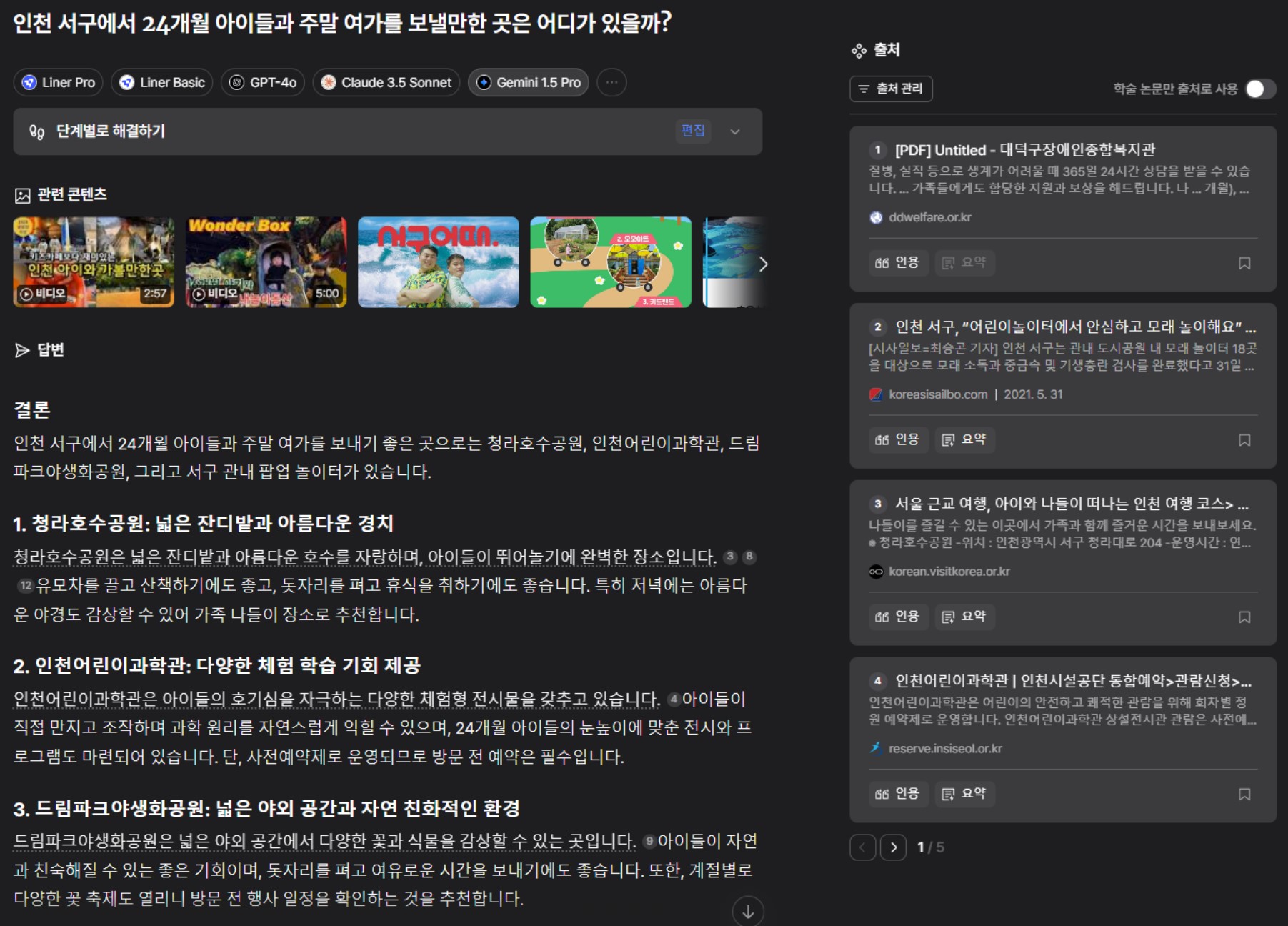
Above is what happened when I asked Liner — an AI answer engine — to "recommend places to go with a 24-month-old." It pulls sources from across the web and synthesizes an answer for me.
In certain domains, these tools now deliver expert-level responses. Some analysts are cautiously suggesting they could disrupt the search market Google and Naver have dominated for two decades. Even online search is facing a real AI challenger.
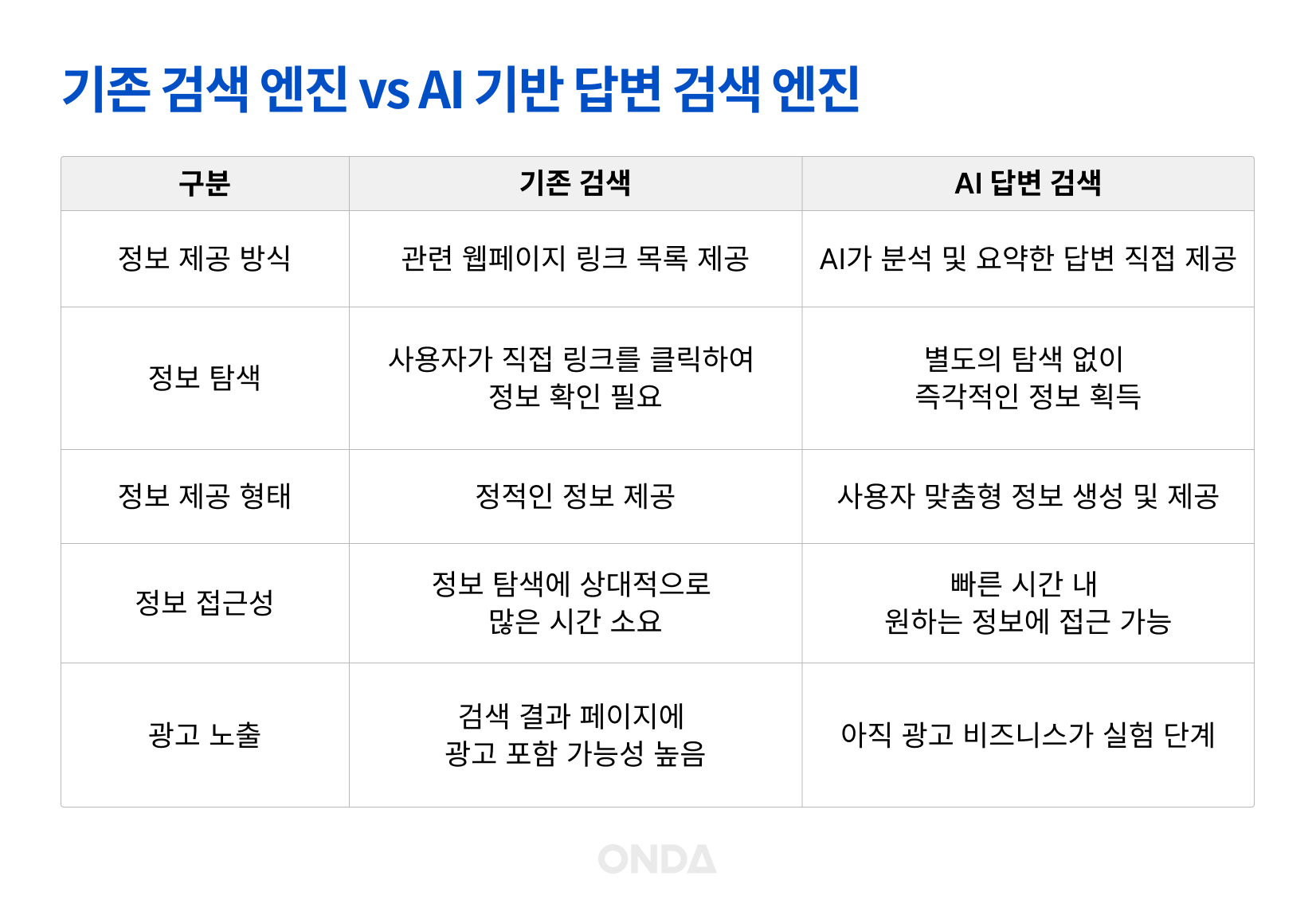
I use Liner and Perplexity most. Unlike traditional search engines, these services find and summarize answers to your question directly from the web. No more tab-hopping through a dozen sites to piece together what you need.
For example: a guest asks, "Recommend a five-star hotel in Gangnam, Seoul." An AI answer engine will scrape booking platforms, travel blogs, and review sites — then return an optimized hotel list without making you do the legwork.
Here's how traditional search and AI answer engines differ:
👉Read the full story: 20 years of online search is about to change
💡 Hospitality Trends
75% of Chinese travelers want to visit Korea next
Between January and August this year, Korea welcomed ~10.67 million tourists — 93% of 2019 levels for the same period. More than half came from China (3.18M), Japan (2M), and Taiwan (980K). So what kind of trip are they planning?
Incheon International Airport recently surveyed 'potential inbound travel intent.' The results: ~75% of Chinese, 55% of Japanese, and 49% of Taiwanese respondents want to visit Korea within the next year. Peak travel intent for all three was September–October. Chinese travelers plan to stay an average of 9 days, Taiwanese 6, Japanese 4.
Chinese tourists mostly travel with friends or partners (56.7%), Taiwanese with family (51.5%). Japanese also favored friends/partners (42.1%), but 1 in 5 (20.3%) is planning a solo trip.
Budget varies wildly by nationality. Average planned spending per Chinese traveler is ₩873,108 — more than double that of Japanese (₩359,267) and Taiwanese (₩353,965) visitors.
⌨️ Keyword News
1️⃣ October long weekend 👉[full story]
TL;DR: October bridge holiday drives 63% surge in outbound, 14% in domestic travel
The story: During Korea's October bridge holiday (Oct 1–9), Trip.com saw outbound bookings from Korean users jump 63% YoY. Domestic bookings rose 14%.
Where are they going? Since the holiday requires burning PTO, travelers favored short-haul destinations: Osaka, Tokyo, Fukuoka (Japan), Bangkok (Thailand), Nha Trang (Vietnam), and Taipei (Taiwan).
2️⃣ August entry/exit numbers 👉[full story]
TL;DR: August inbound visitors recover to 99% of 2019
The story: Foreign arrivals in August hit ~1.56 million — 99% of August 2019 levels. Chinese visitors led at ~510K, followed by Japan, Taiwan, the US, and Hong Kong.
Outbound Koreans? ~2.36 million departed in August, up 12.7% YoY — but down 5.7% MoM (vs. July) due to economic sluggishness and the TMON/WeMakePrice crisis.
3️⃣ Jeju cumulative visitors 👉[full story]
TL;DR: Jeju cumulative visitors up 4.5% YoY
The story: Through October 1, Jeju welcomed ~10.58 million visitors — up 4.5% YoY. Domestic visitors fell 5.9%, but foreign arrivals surged 217.8%.
Why? Post-pandemic, airlines shifted capacity from Jeju routes to Southeast Asia. Last Chuseok, domestic seat supply to Jeju dropped 5.5% YoY.
4️⃣ Interestrip 👉[full story]
TL;DR: Rise of 'Interestrip' — travel built around personal passions
The story: 'Interestrip' (Interest + Trip) is gaining traction: trips centered purely on a hobby or niche interest — not just sightseeing.
What does this mean for hotels? According to Marriott Bonvoy, for Gen Z and Millennials, hotels aren't just places to sleep — they're experiential destinations. Properties with unique activities and distinctive character are winning.
5️⃣ August e-commerce 👉[full story]
TL;DR: August e-commerce posts record-low growth
The story: Fallout from the TMON/WeMakePrice crisis dragged August online shopping transactions to ₩19.558 trillion — just 1.9% YoY growth. The lowest since stats began in January 2017.
Travel segment? Travel and transport services account for 12% of total online shopping and posted a modest 4.5% YoY increase.