Global OTA Trip.com's new growth engine: the 3E strategy and travel innovation
⚠️ All rights reserved. Cite this piece as 'ONDA (온다)' when quoting.
This week's Weekly ON
🏨 Trip.com's vision for the future: '3E' strategy and travel innovation
💡 Even Jeju's upscale dining scene has changed…Fewer tourists, now waving the white flag
⌨️ #SlowTravel #ChineseTouristsReturn #AirbnbCEO #HotelMembershipComparison #UnsoldRoomsSold
🏠 Industry story
Trip.com's vision for the future: '3E' strategy and travel innovation
A 20-something flying to Paris for Taylor Swift, A 50-something with time and money taking extended trips after retirement, And Southeast Asia and the Middle East seeing explosive overseas travel demand as economies grow
These are the three trends behind Trip.com's new growth engine: the '3E (Event+Travel, Elderly, Emerging Markets)' strategy.
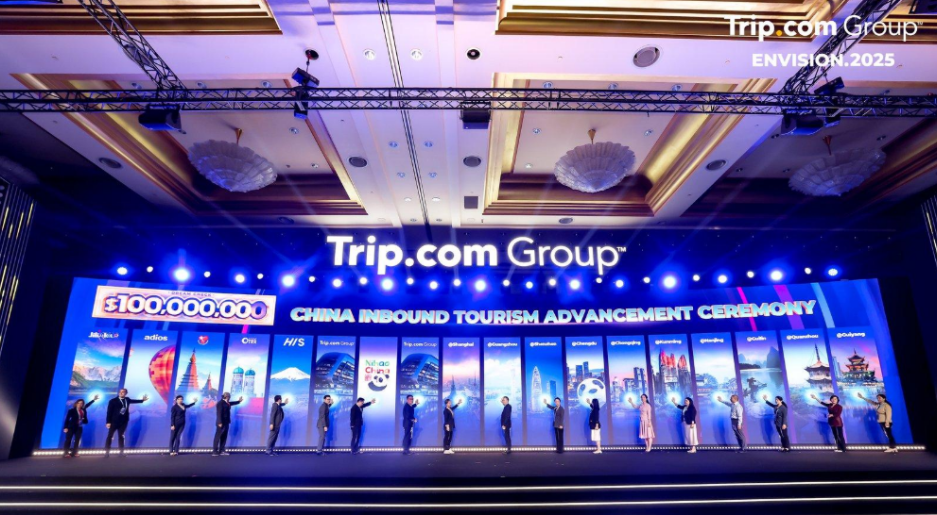
At the 'Envision.2025 Global Conference' held in Shanghai on May 26, Trip.com Group officially unveiled plans to expand around these three keywords and launched a $100 million 'Travel Innovation Fund' (approximately ₩135 billion). Oh, and AI strategy too!
Targeting young travelers, events, and mature consumers
The first pillar of Trip.com's '3E' strategy is Event+Travel. It zeroes in on how young travelers plan trips around concerts, shows, sports events, and other live experiences.
'Fandom travel' and 'event tourism' are emerging global trends. Instead of just visiting tourist sites, people now travel specifically for concerts, sports matches, or festivals. This phenomenon has accelerated post-pandemic as pent-up demand for cultural experiences exploded.
According to Trip.com, they sold over 1,000 event-related products globally last year, and cross-selling of flights, hotels, and attractions alongside event tickets was robust. Unlike traditional travel products, this segment commands high loyalty and premium pricing—making it an attractive market for OTAs.
In fact, during mega-events like Taylor Swift's Eras Tour, BTS concerts, or UEFA Euro 2024, hotel rates in host cities routinely spike 3–5x. Trip.com's analysis: consumers are willing to pay these premiums.
The second pillar, Elderly, targets early retirees with time and money to spend. As populations age globally, senior travelers are emerging as a new consumer force.
Monica Xiao, CEO of Accommodation, noted: "Family travelers account for about 30% of Asia-Pacific tourists. They use F&B services like afternoon tea and dining, plus spa and sports programs at higher rates. Their average spend is higher than other traveler segments."
A key insight: senior travelers prioritize convenience and service quality over price. They can travel in off-peak seasons, helping hotels smooth revenue. They also stay longer and book more activities per trip, directly boosting per-guest spending.
The third pillar is Emerging Markets—going after small but fast-growing economies. Finding new opportunities in rising destinations.
Beyond '3E', Trip.com announced it will establish a $100 million 'Travel Innovation Fund' this year and scale up investments across the travel industry. So what does Trip.com's vision for the future of travel look like?
👉<Keep reading>
💡 Hospitality trends
Even Jeju's upscale dining scene has changed…Fewer tourists, now waving the white flag
Jeju's tourism industry is slashing prices across the board. Not just major hotels and resorts—market vendors and neighborhood restaurants are joining the 'fair price' movement.
Behind the shift: negative tourist perceptions from controversies like overpriced pork belly and 'tourist trap' pricing. Jeju's internal survey found domestic tourists' biggest complaint about Jeju travel was 'cost'. Jeju scored high on nature, food, and accommodation—but many said, "Too expensive to come back."
The tourist drop-off is real. Through March this year, Jeju welcomed ~2.74 million tourists—down 12.9% year-over-year. Domestic tourists, the overwhelming majority, dropped over 15%. March tourist count: 930,000—the first time in three years it fell below 1 million. Luxury hotel occupancy: down from 74% in Q1 last year to 58% this year. Will Jeju's industry changes win tourists back? We're watching.
⌨️ Keyword news
1️⃣ Slow travel 👉[full story]
TL;DR: Agoda names Seoul top 3 slow travel city in Asia
The story: Agoda's 'Best Slow Travel Destinations in Asia' ranked Seoul #3 (after Thailand's Rayong and Indonesia's Kalegowa; ahead of Tokyo and Vietnam's Nha Trang). Slow travel means staying longer in one place for full rest—immersing in local culture, food, and people.
2️⃣ Chinese tourists return 👉[full story]
TL;DR: Chinese tourist arrivals climbing—up 6.5% YoY
The story: Foreign tourist arrivals to Korea in March hit 1.615 million, up 8.2% year-over-year. Chinese tourists grew 6.5%. Chinese visitor numbers already recovered to pre-COVID levels; visa exemptions for group tours in H2 are expected to drive further growth.
3️⃣ Airbnb CEO 👉[full story]
TL;DR: Airbnb CEO Brian Chesky visits Korea
The story: Brian Chesky made Korea the final stop on his global city tour. At each stop, he announced collaborations with major local cultural events. In Korea, he'll launch an experience program with Seventeen and unveil a new partnership with HYBE.
4️⃣ Hotel membership comparison 👉[full story]
TL;DR: HotelsCombined launches hotel membership price comparison
The story: HotelsCombined launched a service comparing official rates and member benefits across Marriott, IHG, Hilton, Hyatt, and other major chains. No need to visit each chain's site—compare member rates, book, and check loyalty rewards all in one place.
5️⃣ Unsold room sales 👉[full story]
TL;DR: Hotel caught selling undeclared condo-tel rooms
The story: A condo-tel on Gangwon-do's east coast was caught operating without a lodging license. Of 279 total rooms, only 163 were licensed. The other 116 were neither sold nor registered. Since February, the property took guests beyond its licensed capacity—during the May holiday, over 120 unlicensed rooms operated illegally.