100,000 potential rooms entering the market — what deregulation of saengsuk (생숙) short-term rentals means for you
⚠️ All rights reserved. Cite this piece as 'ONDA (온다)' when quoting.
In this week's Weekly ON
🏨 Easing Short-Term Rental Rules: How Big is the Impact on Your Market?
💡 2026 Policy Changes Every Accommodation Owner Should Watch
⌨️ #MyRealTrip FTC #Hotel Cakes #Korea Tourism Organization #OTAs vs Travel Agencies #Warming China Relations
🏠 Industry Deep Dive
Easing Short-Term Rental Rules: How Big is the Impact on Your Market?
The Korean accommodation market just took a hit—a supply bomb. On January 5, the Ministry of Land, Infrastructure and Transport announced sweeping deregulation of saengsuk (short-term residential facilities). This isn't just a policy tweak—it's a door opening for tens of thousands of rooms that have operated in the gray market to go legit.
You've probably seen the headlines: "Short-term rental rules eased." But do you know exactly what changed—and what it means for your business? Today we're breaking down the Ministry's announcement, analyzing the real impact, and laying out actionable strategies for both existing hoteliers and aspiring saengsuk operators.
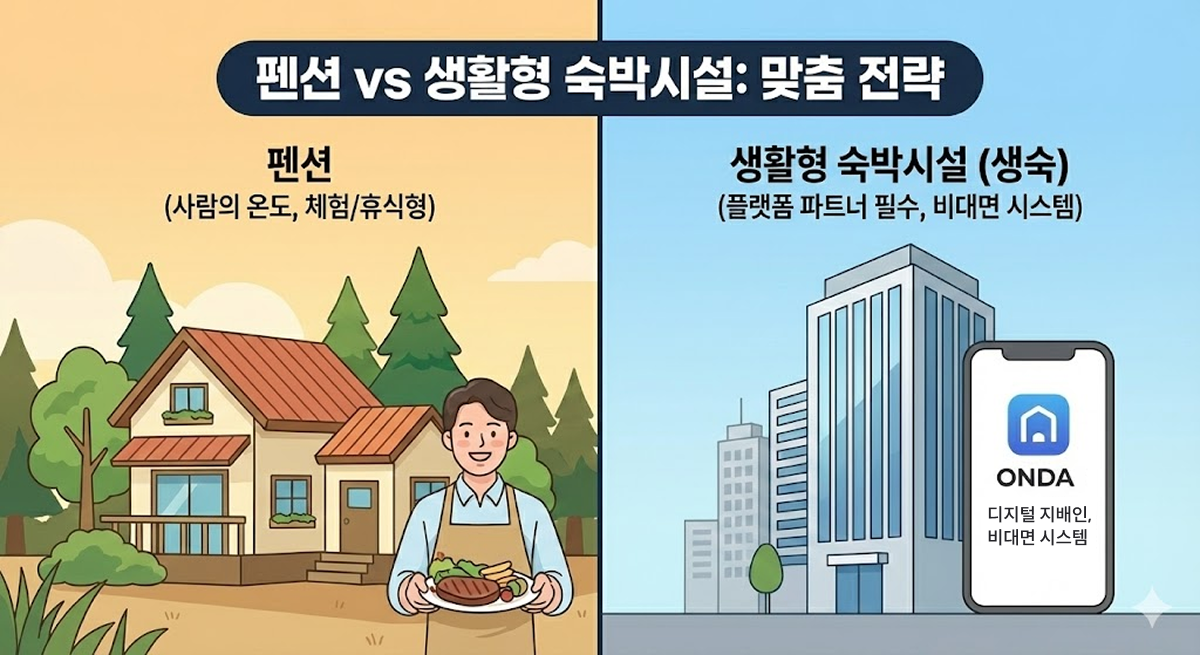
What Changed? Three Key Shifts
1️⃣ You can now operate legally with just one room
Previously, registering as a saengsuk required at least 30 rooms or owning one-third of the building's total floor area—effectively locking out individual owners. Under the new regulatory sandbox approval, you can operate legally with as few as one room, via approved online platforms.
2️⃣ No front desk required
The old rule mandated a physical reception desk—meaning 24/7 staff and capital outlay. Now, mobile ID verification, facial recognition, and other contactless check-in systems can replace the front desk entirely. Technology officially replaces people.
3️⃣ Platforms become the managers
To prevent a free-for-all, the government built in safeguards: real-time monitoring via approved platforms, mandatory hygiene and safety inspections. In other words, you can't operate solo—you must go through a vetted platform to qualify under the new rules.
What Does This Mean for the Market?
The real story here isn't "individuals can now run lodging businesses." It's that the government has officially sanctioned a new model: platforms-as-front-desks.
Thousands of saengsuk units that operated under the radar—dodging taxes and safety standards—will now come out of the shadows. That means a more transparent, accountable market over time. But in the short term, expect a wave of new supply and fiercer price competition.
Industry estimates suggest up to 100,000 latent rooms could flood the market—especially in central urban areas with easy transit access. Think mid-to-low-tier inventory near subway stations and business districts.
When the market shifts, strategy must shift too. Let's look at what this means for existing hoteliers and (prospective) saengsuk operators.
👉<Continue Reading>
💡 Hospitality Trends
2026 Policy Changes Every Accommodation Owner Should Watch
TL;DR: Rising labor costs, new safety disclosure rules, and a host of tax/financial support measures will reshape hotel operations in 2026.
The story: On the labor and safety front, expect higher costs and tighter oversight. The minimum wage rose to ₩10,320/hour on January 1, forcing a rethink of staffing plans. Meanwhile, major booking platforms (Yanolja, Yeogi Eottae) and the National Fire Agency website will now publicly display whether your property has sprinkler systems installed and up-to-date inspection records. Guests will see this info before booking—so facility maintenance isn't optional anymore.
On the tourism policy side, April brings the Healing Tourism Industry Development Act, unlocking government support for wellness tourism. Regulatory sandboxes for hospitality tech will have faster approval timelines and longer pilot periods. Initiatives like "Commercial District Renaissance 2.0" and "K-Food Gastronomy Belts" aim to inject new life into local tourism ecosystems.
For struggling small business owners, financial relief is expanding. Post-closure entrepreneurs (annual sales under ₩1.5B) now qualify for tax collection deferrals. The income threshold for startup tax breaks rises from ₩80M to ₩104M. Starting February, a new "livelihood account" system (₩2.5M/month limit) protects minimum living expenses from creditor seizure. And mid-term loan repayment fees—once a costly trap—will be abolished across all financial institutions.
Finally, commercial lease transparency gets a boost. From May, tenants can demand itemized breakdowns of management fees from landlords—ending the practice of jacking up opaque "maintenance costs" to sidestep rent-increase caps.
⌨️ News in Brief
1️⃣ MyRealTrip FTC 👉[Full Story]
TL;DR: Korea's Fair Trade Commission fined MyRealTrip for failing to display seller information on travel listings.
The story: The FTC ruled that MyRealTrip violated e-commerce law by not properly disclosing the name, representative, and business registration number of third-party sellers on its platform. The penalty: a corrective order and a ₩500,000 fine. The message: consumers have a right to know exactly who they're contracting with.
2️⃣ Hotel Cakes 👉[Full Story]
TL;DR: Luxury hotels' ₩350,000–500,000 cakes spark debate: "highway robbery" vs "you get what you pay for."
The story: Top Korean hotels rolled out holiday cakes priced as high as ₩500,000. A YouTube breakdown estimating ingredient costs at around ₩30,000 (a 17% cost ratio) triggered a firestorm. Hotels defended the pricing, citing premium ingredients, artisan labor, and exclusivity. Critics called it price gouging. The debate continues.
3️⃣ Korea Tourism Organization 👉[Full Story]
TL;DR: Park Sung-hyuk appointed new CEO of Korea Tourism Organization—pledges to hit 30M inbound tourists faster.
The story: In his inaugural address, CEO Park outlined an aggressive roadmap: building an AI-powered digital marketing platform and deploying market-specific campaigns to accelerate Korea's goal of 30 million annual inbound visitors. The Ministry of Culture, Sports and Tourism is backing the push with budget increases and an upgraded tourism policy bureau.
4️⃣ OTAs vs Travel Agencies 👉[Full Story]
TL;DR: 2026 sees an all-out battle between traditional travel agencies and platform giants.
The story: Legacy travel agencies are doubling down on premium packages and direct B2C channels to defend margins. Meanwhile, OTA platforms are wielding AI to enter the package tour space. And global juggernauts like Agoda and Trip.com are pouring capital into localized, upscale offerings. It's shaping up to be a three-way war.
5️⃣ Warming China Relations 👉[Full Story]
TL;DR: As Korea-China ties thaw, Korean retailers and hotels accelerate expansion into the Chinese market.
The story: Fresh signals from the Korea-China summit have emboldened Korean companies. Musinsa is launching a joint venture and opening stores. Hotel Shilla debuted its first "Shilla Monogram" hotel in Xi'an. And CU is partnering with Chinese distributors to expand its private-label product lineup. The freeze is melting.